
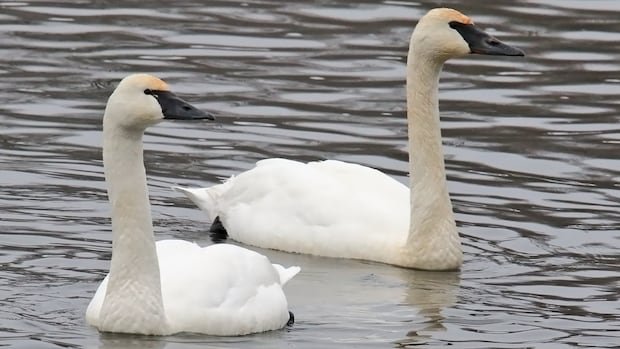

The federal government is reviewing a proposal to introduce a new hunting season for tundra swans in the Prairie provinces, a move that has raised concerns about potential risks to trumpeter swans, a similar-looking and sensitive species, according to a hunter.
The proposed changes to Canada’s migratory bird regulations would establish a tundra swan hunting season in Alberta, Manitoba, and Saskatchewan. While tundra swans are legally hunted in some U.S. states, they are currently protected in Canada at the federal level.
David Duncan, a hunter and retired biologist, warns that allowing a tundra swan hunt could result in accidental shootings of trumpeter swans, which are not permitted to be hunted in North America due to their sensitive status. The similarities in appearance between the two species, combined with overlapping habitats, pose a significant challenge for hunters in distinguishing between them.
Trumpeter swans were once considered a threatened species in Alberta but have since been reclassified as a species of special concern due to population recoveries across North America in recent decades. Duncan emphasizes the risk of unintentional harm to trumpeter swans if a tundra swan hunting season is implemented.
Tundra swans and trumpeter swans are the only native swan species in Canada, with the mute swan, an invasive species from the Old World, also present in the country. Trumpeter swans, known for their massive wingspan of up to three meters and being the heaviest native bird in North America, are a key conservation focus.
Wildlife biologist Frédérique Tremblay from the Canadian Wildlife Service assures that measures to safeguard trumpeter swans are being considered in the proposed hunting season. Drawing on data from the U.S., where both tundra and trumpeter swans coexist, Tremblay notes that accidental killings of trumpeter swans during tundra swan hunts are minimal.
To mitigate risks to trumpeter swans, the proposal includes requirements for hunters to report tundra swan harvests promptly to confirm the correct species. The allocation of hunting permits would be limited, with 500 in Alberta, 600 in Saskatchewan, and 400 in Manitoba under the plan.
The federal government believes that the proposed tundra swan hunting season would offer new opportunities for hunters, supporting outfitters and local businesses. The proposal, currently in the consultation phase, seeks public feedback before any final decisions are made.
In addition to the tundra swan hunt, the proposed migratory bird hunting changes involve opening a mourning dove hunting season in the Prairie provinces and expanding sandhill crane hunting in Alberta. These adjustments are part of a broader effort to enhance wildlife management based on science and sustainability.
Alberta’s Ministry of Forestry and Parks expressed support for the proposed changes, emphasizing the importance of data-driven decisions and collaboration between federal and provincial authorities. The earliest possible implementation of new hunting seasons, including the tundra swan hunt, is set for 2028.