
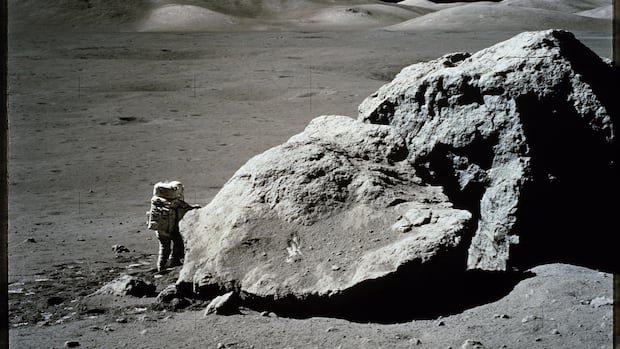

On July 20, 1969, the world anxiously watched as two American astronauts, Neil Armstrong and Buzz Aldrin, smoothly landed on the moon’s surface while command module pilot Michael Collins orbited above. This historic event was expected to mark the beginning of a new era – the space age, where humans would break free from the constraints of Earth and venture into the vast expanse of space.
Following several more missions, including the infamous Apollo 13, which faced a critical malfunction preventing a lunar landing, humanity’s aspirations for the moon were halted after Apollo 17 in December 1972. Various factors have been attributed to the conclusion of moon exploration, such as the costly Vietnam War, achievement of the goal to beat the former Soviet Union to the moon, and declining public interest.
However, after 53 years since humans last visited the moon, NASA’s ambitious Artemis program aims to reignite lunar exploration by planning to return humans to the lunar surface in the coming years. The endeavor is not just about revisiting the moon but also about advancing science and engineering, pushing the boundaries of human achievement, and paving the way for future space exploration endeavors.
The forthcoming Artemis II mission, scheduled for early February, will see Canadian Space Agency’s Jeremy Hansen and NASA astronauts Reid Wiseman, Victor Glover, and Christina Koch embark on a 10-day journey around the moon, setting a new record for the farthest distance traveled by humans. This mission will involve testing essential equipment and conducting experiments to gather crucial data for the subsequent Artemis III mission in 2028, where astronauts will return to the lunar surface, specifically targeting the moon’s unexplored south pole.
Notably, the Artemis program is not the only initiative focused on lunar exploration. Countries like China and India are also making significant strides to land humans on the moon by 2030 and 2040, respectively. Moreover, there is a growing interest from private companies in establishing a permanent presence on the moon, indicating the emergence of a new space economy driven by lunar resources and exploration.
While some may question the rationale behind investing in lunar exploration, proponents argue that the endeavor is not only an investment in scientific advancement but also in economic growth and technological innovation. Discoveries and technologies developed through space missions, such as the Apollo program, have led to significant advancements in various fields, including healthcare, communications, and materials science.
As the world embarks on a new chapter of lunar exploration, governments and private entities are actively engaging in endeavors that could potentially shape the future of space exploration and human civilization. The return to the moon signifies a pivotal moment in humanity’s quest for knowledge, progress, and prosperity, with the potential to transform societies and industries on a global scale.