
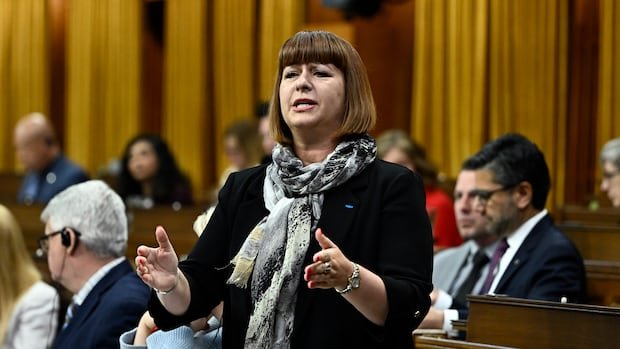

Liberal Member of Parliament Marie-France Lalonde is advocating for a nationwide discontinuation of biannual clock changes in Canada and plans to introduce legislation to formalize this change. Lalonde emphasized the need to address the issue of time change, stating that Canadians often question the rationale behind adjusting their clocks.
Her proposed bill does not seek to eliminate time changes outright but aims to prompt the federal government to convene a conference involving various stakeholders to establish a standard time that would remain consistent throughout the year. While many jurisdictions in Canada adhere to the practice of advancing clocks by an hour in the spring and then setting them back in the fall, Saskatchewan, Yukon, parts of British Columbia, and Nunavut do not partake in this tradition.
Several provinces, including British Columbia, Manitoba, and Ontario, have aligned their time change policies with certain U.S. states. Despite discussions around abolishing time changes in Quebec and the Northwest Territories, no concrete decisions have been made. Alberta conducted a referendum in 2021, with a slim majority voting in favor of maintaining biannual clock adjustments.
Lalonde’s initiative aims to unify the country’s approach to time changes and foster collective decision-making. She stressed the importance of collaborative efforts among provincial and territorial governments to address this issue comprehensively. Various experts have highlighted the adverse effects of biannual clock changes, linking them to health risks and increased accident rates.
While there are concerns about the potential disruption of sleep patterns with a permanent switch to daylight time year-round, sleep experts caution against overlooking the impact of morning light on the body’s sleep-wake cycle. The scientific community supports informed societal discussions on time change policies, emphasizing the need for evidence-based decision-making.
Although Lalonde acknowledges that the legislative process for her private member’s bill may be lengthy, she is committed to initiating dialogue on this topic. The proposed legislation seeks to spark a national conversation on the future of time changes in Canada.