
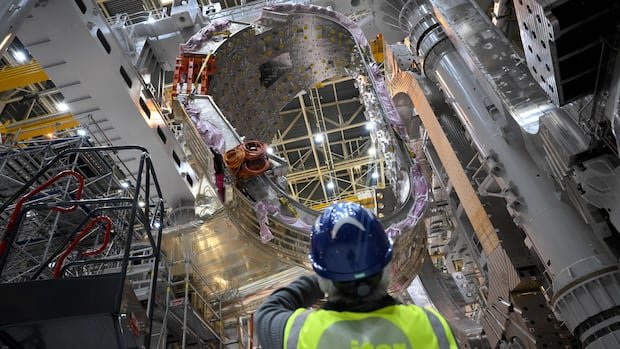

A surge of excitement has been generated by recent advancements in nuclear fusion technology achieved by Canada’s General Fusion and China’s EAST reactor, signaling progress towards harnessing clean, limitless energy to meet the escalating power demands from artificial intelligence and electrification. This momentum has spurred the emergence of new fusion startups worldwide, attracting substantial private investments.
Nuclear fusion, a long-studied method of producing abundant, safe, and eco-friendly energy, involves the fusion of atomic nuclei to generate a significant amount of energy. Unlike traditional nuclear reactors that produce radioactive waste through atom splitting, fusion reactions utilize hydrogen, readily available in water, without generating harmful byproducts. While commercial fusion reactors are not yet operational, ongoing developments hold promise for a sustainable energy future.
China’s EAST fusion reactor recently achieved a significant milestone by maintaining stable plasma at densities surpassing previous limits, potentially paving the way for cost-effective commercial fusion reactors. Similarly, General Fusion’s groundbreaking announcement of record neutron production has rekindled interest in the field. These advancements, though incremental, demonstrate progress towards viable fusion energy solutions.
In Canada, the establishment of the Centre for Fusion Energy in Ontario, supported by government funding and private investment, underscores the country’s commitment to advancing fusion technology. The global fascination with fusion stems from concerns about climate change and energy security, as industries seek carbon-free, reliable energy sources to meet evolving demands.
While the path to operational fusion power plants presents challenges such as reactor durability and sustainable fuel systems, ongoing research aims to overcome these hurdles. The industry’s growth, with substantial investments from tech giants and oil companies, reflects optimism for fusion’s potential to revolutionize the energy landscape. As the science advances, collaboration between private enterprises and governments is crucial to drive innovation and establish regulatory frameworks for future fusion energy implementation.