
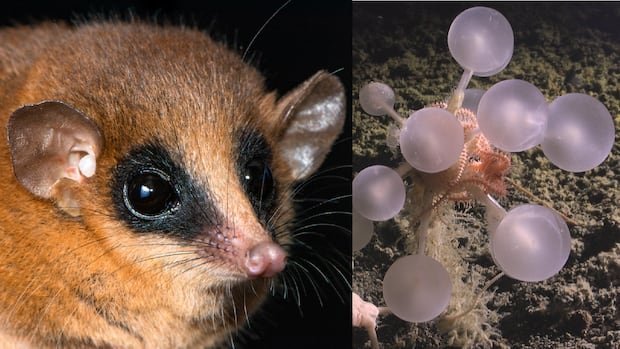

In 2025, a variety of fascinating new species were unveiled by science. Among these discoveries are a spider species with remarkably elongated genitalia, a carnivorous caterpillar that adorns itself with its prey’s body parts, and a diminutive opossum residing in mountainous regions.
Recent research indicates that approximately 16,000 new species are documented annually, with this rate steadily increasing. A significant 15% of all known species have been newly identified in the past two decades. This growth in species discoveries surpasses the rate of species extinctions, estimated at around 10 per year.
While many of these species were previously known or observed locally, they were not officially classified by science until now. Scientists emphasize the importance of this formal documentation process, asserting that awareness of a species’ existence is crucial for its conservation.
Discovering new species provides insights into unique and captivating creatures previously unknown to us. Let’s delve into some of these new species:
Tarantulas with Exceptionally Long Genitalia:
Recently, four tarantula species were found in the Horn of Africa and Arabian Peninsula, with males possessing the longest genitalia among all known tarantulas. The largest species, Satyrex ferox, boasts a leg-span of 14 centimetres and males with palps measuring five centimetres long.
Caterpillar with a Macabre Fashion Sense:
In Hawaii, scientists discovered a caterpillar that dwells in spider webs, feeds on trapped prey, and adorns its body with the prey’s body parts to create a protective covering. This unique “bone collector” caterpillar, transforming into a moth, was identified in a small forest area in O’ahu.
Carnivorous ‘Death-Ball’ Sponge:
Explorations in the Southern Ocean near Antarctica unveiled 30 new species, including the carnivorous ‘death-ball’ sponge, which ensnares prey with tiny hooked spheres. Other discoveries include new sea star species and an iridescent scale worm.
Eggy Sea Slug:
Shallower waters revealed a stunning sea slug resembling fried eggs, named Phyllidia ovata. This species, preying on sponges and utilizing their toxins for defense, was described in July after being photographed in Indonesia years ago.
New Canadian Crayfish:
The Okanagan crayfish, discovered in British Columbia’s Okanagan Lake, stands out for its absence of a white mark found on the signal crayfish’s claw. This new species, considered endangered, raises concerns due to heavy human activity in its habitat.
New Bats and Reptiles:
Canadian researchers contributed to the identification of six new tube-nosed bat species from the Philippines. Additionally, unique reptiles named after famous characters, such as the Pinocchio chameleon and the Crocodile Hunter snake, were discovered.
Tiny Mouse Opossum:
A small mouse opossum, Marmosa chachapoya, found in the Peruvian Andes, stands out for its diminutive size and high-altitude habitat. Described in a scientific journal in June, this mouse opossum offers a charming addition to this year’s species discoveries.
Toads with a Unique Reproduction Strategy:
Three exceptional toad species from Tanzania were found living in trees, giving birth to live toadlets as they skip the tadpole stage. This rare live-bearing trait makes these new species particularly intriguing.
These new species enrich our understanding of biodiversity and highlight the importance of conservation efforts to protect our planet’s diverse and fascinating inhabitants.