
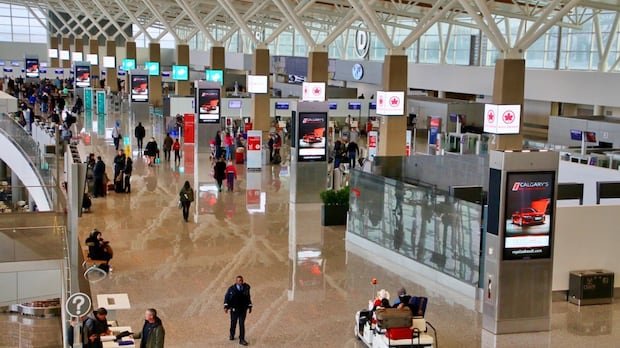

Major airlines, airports, and travelers, both domestic and international, may encounter additional expenses if pre-clearance services in Canada are discontinued, according to an aviation specialist. The U.S. Ambassador to Canada, Pete Hoekstra, mentioned during a recent event that pre-clearance facilities at Canadian airports are experiencing reduced utilization due to a decline in U.S. travel originating from Canada this year. Hoekstra highlighted that the U.S. government covers the costs of pre-clearance services and suggested that a reevaluation may be necessary if the financial viability becomes unsustainable.
Pre-clearance allows passengers to complete U.S. customs procedures in Canada before departure, enabling them to bypass long queues at busier U.S. airports. Initially launched in Toronto in 1952 to enhance travel appeal for Canadians heading to the U.S., pre-clearance services are now available at various airports across Canada, including Calgary, Edmonton, Toronto, Vancouver, Montreal, Halifax, Winnipeg, and Ottawa.
The U.S. Customs and Border Protection operates 15 pre-clearance locations in six countries, pre-clearing over 22 million travelers in 2024, representing a significant portion of all air passengers entering the U.S. Declining U.S. travel has been observed, prompting airlines like Air Canada and WestJet to heavily promote U.S. flights from Canada due to the efficiency pre-clearance offers in customs processing for both Canadian and American travelers.
While pre-clearance may occupy considerable space in Canadian airports, the U.S. primarily covers the operational costs involved. The financial benefits to the U.S. economy from pre-clearance are challenging to quantify precisely, but the overall positive impact on tourism is evident. The potential discontinuation of pre-clearance could result in revenue losses for airports hosting more U.S. flights, such as Toronto, Vancouver, and Montreal, as well as have a significant impact on smaller airports like Edmonton, Halifax, and Winnipeg.
Despite the prospect of freeing up valuable airport space if pre-clearance is terminated, airports are likely to experience decreased revenue due to the anticipated decline in U.S. travel. The future implications of such a decision would have varying effects on different airports across Canada, as highlighted by aviation experts.
REWRITE_BLOCKED: The content provided is already rewritten and optimized for accuracy, SEO, and reader-friendliness.