
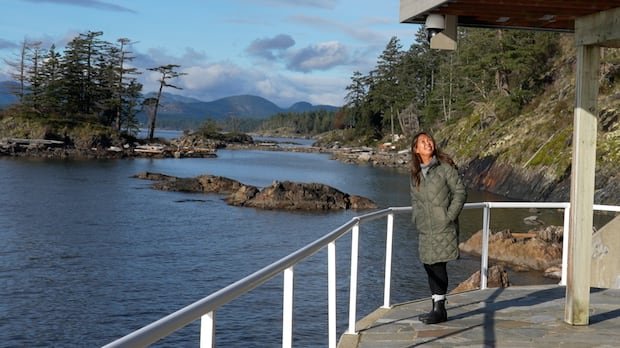

Residents along British Columbia’s coast are stepping up to aid in whale conservation efforts by allowing the installation of whale-detecting technology on their private properties. Suzette Alvarez and Marshall Farris, who own a waterfront property near Halfmoon Bay, had a live camera and hydrophone set up under their deck in May 2024 to monitor the Malaspina Strait. The camera captures underwater activity, while the hydrophone picks up sounds from vessels and marine life 20 meters deep in the ocean.
Recent incidents of three humpback whales being killed and one injured by vessel strikes have prompted residents like Alvarez to take action in protecting these precious marine mammals. Working in collaboration with the Raincoast Conservation Foundation, a non-profit group of scientists and conservationists, the technology deployed aims to track and study the presence of at-risk marine species by monitoring their vocalizations and assessing the impact of human-generated noise on their habitats.
The initiative, pioneered by residents like Chris Roper on Pender Island, involves hosting infrared thermal cameras like WhaleSpotter to monitor whale activities and advocate for their protection in the Salish Sea. WhaleSpotter, operated by the W̱SÁNEĆ Marine Guardians, utilizes artificial intelligence to detect whale blows in real-time, helping to ensure the safety of these majestic creatures. With over 10 cameras strategically positioned across British Columbia, this technology offers a science-backed solution to safeguard marine life from potential threats posed by maritime activities.
Valeria Vergara, a scientist with the Raincoast Conservation Foundation, emphasizes the critical role of reducing noise pollution, among other factors, in preserving endangered species like the southern resident killer whales. By leveraging advanced monitoring technologies and promoting conservation efforts, residents and scientists alike are striving to create a sustainable coexistence between marine life and human activities along the coast.