
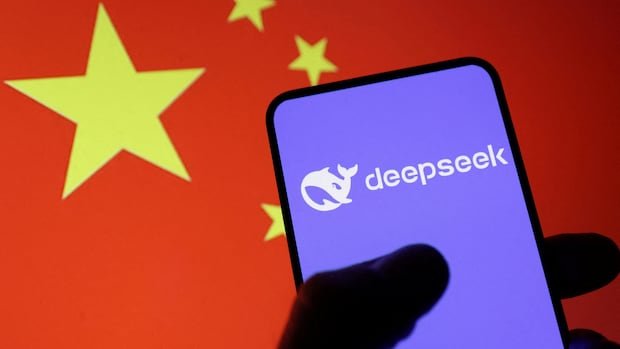

A Beijing-based company has unveiled China’s most advanced artificial intelligence model to date, narrowing the technological divide between China and the U.S. in what some describe as a modern-day cold war. The new AI model, Kimi K2 Thinking, developed by Moonshot AI, is a generative chatbot powered by artificial intelligence, akin to OpenAI’s ChatGPT and Anthropic’s Claude.
According to Michael Deng, a technology analyst at Bloomberg, Kimi K2 Thinking is the most competitive Chinese AI model since Deepseek in January, which caused market turbulence due to concerns about Chinese AI progress. While Kimi K2’s release received less attention, it excelled in Humanity’s Last Exam, a challenging 2,500-question benchmark that evaluates an AI’s reasoning capabilities beyond basic data recall, ranking closely behind recent ChatGPT models and surpassing Claude 4.5 and Meta’s Llama.
Experts suggest that although the U.S. leads in AI development, China’s progress is notable and serves as a significant competitive force. Companies and consumers in North America are increasingly embracing Chinese-made AI due to its technical sophistication, which rivals top U.S. technologies. Notably, Airbnb relies on Alibaba’s Qwen model for its AI agents, while venture capital firm Social Capital opted for Kimi K2 for its efficiency and cost-effectiveness over OpenAI and Anthropic.
While concerns persist about Chinese AI domination and its potential implications, some view the AI race as a pivotal battleground for values and ethics. U.S. Senator Ted Cruz warned of state-controlled surveillance with Chinese AI dominance, emphasizing the importance of American values in shaping AI technology. However, both Chinese and U.S. AI models have demonstrated biases, political leanings, and memory limitations, raising questions about the ethical implications of AI advancements.
The competition between the U.S. and China in AI development reflects differing approaches and priorities. China’s focus on electrical capacity and industrial applications contrasts with Silicon Valley’s pursuit of comprehensive AI solutions for various sectors. This diversity in AI development strategies suggests that there is no definitive winner in the global AI race, with both countries leveraging AI technology in distinct ways to address their unique challenges and opportunities.