
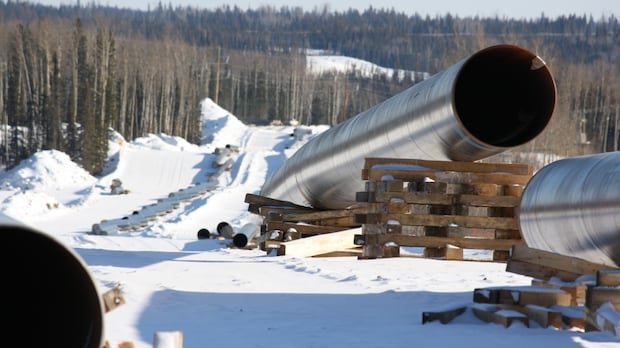

A number of proposed expansions to key pipelines across the nation are poised to significantly boost the oil export capacity from Western Canada. The cumulative impact of these expansions is akin to the construction of a sizable new pipeline.
Enbridge, the largest pipeline operator in the country, has put forth four expansion plans for its pipeline network. The company, headquartered in Calgary, has recently made a final investment decision to move forward with the initial phase of expansion. This phase involves a $1.4 billion investment to increase the shipping capacity by adding 150,000 barrels per day to its Mainline system and an extra 100,000 barrels per day to its Flanagan South pipeline. The anticipated completion of this project is set for 2027.
Colin Gruending, President of liquids pipelines at Enbridge, highlighted that these pipeline expansions align with the gradual growth in supply. These proposals emerge as Alberta embarks on its pipeline project and discussions resurface about reviving the failed Keystone XL pipeline.
Trans Mountain is also exploring enhancements to its pipeline system from Edmonton to a port near Vancouver. Although the physical dimensions of the pipeline remain unchanged, the Crown corporation is investigating the use of drag-reducing agents to boost oil transportation capacity. Additionally, plans are underway to construct more robust pumping stations to facilitate increased oil flow through the pipeline.
Gruending expressed confidence that the collective optimizations by Enbridge and Trans Mountain will alleviate concerns about export limitations, even as oil production in Alberta continues to rise. He emphasized that these optimizations should suffice for the foreseeable future, with potential for further enhancements down the line.
According to a recent report by TD Cowen, the country’s export pipelines are nearing full capacity and could reach their limit by fall 2028. However, by enhancing existing pipelines, spare export capacity can be created for several additional years. The report suggests that expedited pipeline expansions could extend this timeline into the mid-2030s, albeit with existing tight schedules and limited visibility.
The proposed expansions are projected to add over one million barrels per day in shipping capacity, with Western Canada currently producing around 5 million barrels of oil daily. Alberta’s pursuit of additional pipeline projects and considerations about resurrecting the Keystone XL pipeline are seen as speculative scenarios by TD Cowen, necessitating substantial development time if they materialize.
Amidst global oil surplus forecasts by the International Energy Agency, Enbridge is assisting the Alberta government in evaluating the potential for a new export project. Gruending emphasized the time-consuming nature of such developments, underscoring the significance of demand from oil companies and their commitment to long-term contracts as pivotal factors in project viability.
As ample new pipeline capacity is anticipated in the coming years, the level of commitment from oil companies remains uncertain at present.