

Archeologists have unearthed the remnants of an ancient encampment on a secluded High Arctic island dating back over 4,000 years. These findings provide intriguing insights into the earliest inhabitants near the current Canada-Greenland border who exploited a flourishing new environment that emerged around that era.
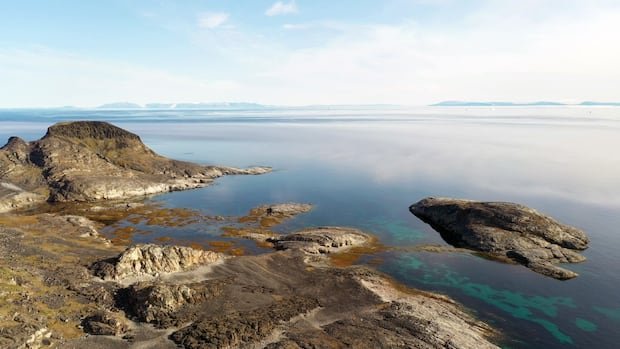
The Paleo-Inuit archaeological site was discovered in Kitsissut, a rugged archipelago of rocky islands situated between Greenland and Ellesmere Island. Accessing this location today by boat entails a daunting journey of at least 53 kilometers from the nearest shore amidst challenging High Arctic marine conditions.
Matthew Walls, the lead researcher of the recent study documenting the discoveries, remarked that reaching Kitsissut via watercraft would have been a remarkable feat for ancient travelers. He estimates that paddling to the site by canoe or kayak would have required 12 to 15 hours of strenuous effort, with the weather potentially shifting from calm to stormy en route.
The archaeological site reveals evidence of repeated visitations and habitation by numerous individuals over an extended period. Walls noted that it clearly served as a long-term destination for these ancient people.
Max Friesen, an Arctic archaeologist from the University of Toronto, highlighted that the Paleo-Inuit likely possessed more advanced seafaring technology than previously assumed. Fragments of their watercraft, resembling canoes or kayaks constructed from animal skins draped over bone or wood frames, have been uncovered, indicating their sophisticated maritime capabilities.
The discoveries at Kitsissut suggest that the Paleo-Inuit had the expertise and tools to undertake extensive seafaring journeys, potentially engaging in activities such as hunting seals and even whales in the open ocean. This expanded understanding of their transportation technology has broad implications for comprehending ancient Arctic societies and their impact on ecosystems.
Collaborating with Inuit archaeologists from the University of Greenland, Walls and his team meticulously mapped the archaeological site and excavated artifacts between 2017 and 2019. The site features a series of beach ridges that have gradually emerged from the sea over time, revealing at least 18 tent rings – cleared circular areas surrounded by stone rings where tents, likely made of sealskin stretched over driftwood frames, were erected.
Moreover, the presence of a central hearth with burnt driftwood remnants and segmented tent layouts indicates different functional areas within the structures for activities like crafting tools or processing animal skins. Radiocarbon dating of a seabird bone found within one tent ring suggests that the site dates back approximately 4,000 to 4,400 years, coinciding with the emergence of the Paleo-Inuit in the High Arctic.
Around the same period, a thriving ecosystem began to develop in Kitsissut, driven by the formation of a unique open-water channel in the sea ice known as the Pikialosorsuaq or North Water polynya. This ecological hotspot supported phytoplankton blooms, sustaining a diverse food chain comprising seabirds, marine mammals, and other species that migrated to the area when the polynya formed.
The presence of nesting seabird colonies on the cliffs and the availability of marine resources like seals in the surrounding waters highlight the importance of the polynya in shaping the local biodiversity. Walls emphasized the significance of recognizing Indigenous communities’ historical connection to these ecosystems and the need for their stewardship to ensure conservation efforts align with traditional knowledge.
Lesley Howse, director of archaeology at the Inuit Heritage Trust, emphasized the shift in understanding regarding the Paleo-Inuit’s maritime skills, underscoring the vital role of water resources in Arctic survival. The research sheds light on how ancient inhabitants adapted to their environment by utilizing all available resources and technologies to thrive in challenging conditions.
Overall, the discoveries at Kitsissut provide valuable insights into the Paleo-Inuit’s seafaring capabilities, resource utilization strategies, and their enduring relationship with the Arctic environment.